


Program in the Garden of the Museum of African Art
“Recy: Sculpt(H)ure-aay” – on Waste as a Contemporary Cultural and Ecological Issue
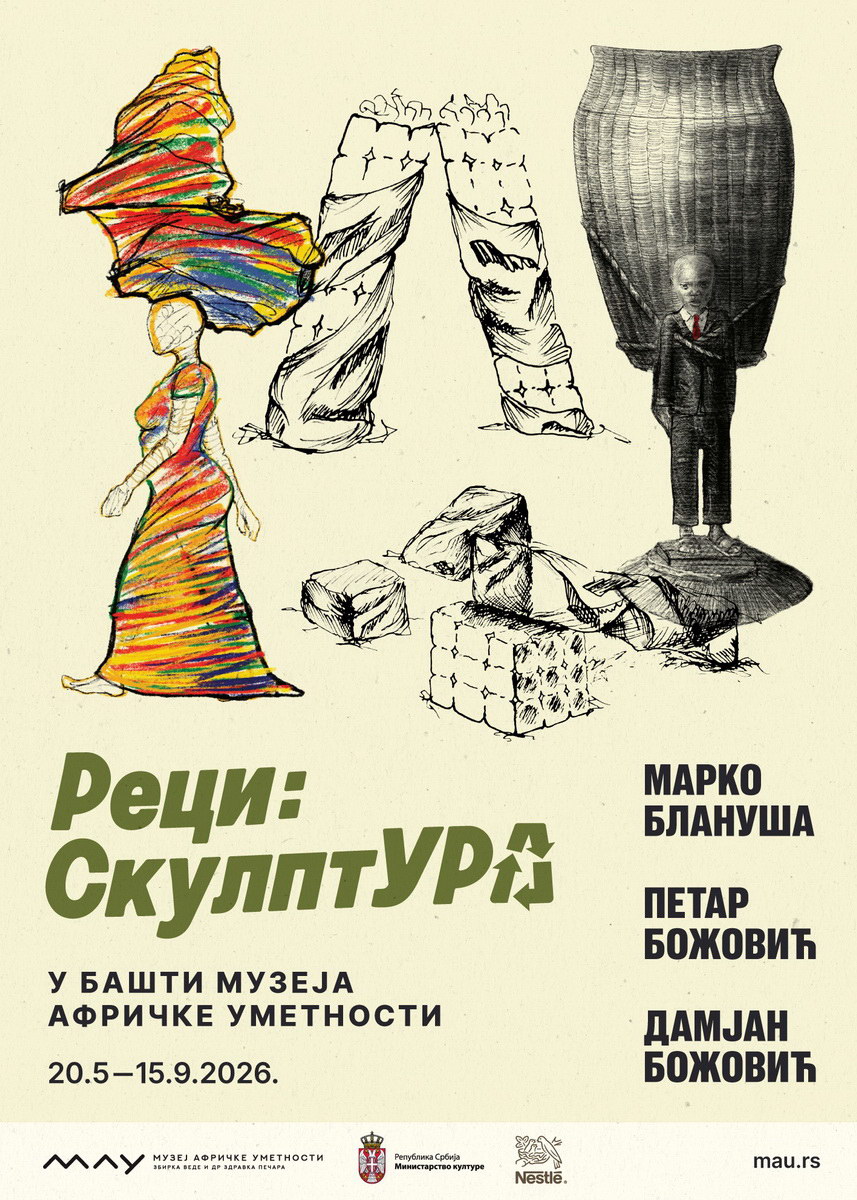 May 20 - September 15, 2026
In the garden of the Museum of African Art, from May 20 to September 15, 2026, the program “Recy: Sculpt(H)ure-aay” will be realized, representing a accompanying segment of the ongoing exhibition “Recy: Art – Waste as a Resource,” authored and curated by Ivana Vojt.
The thematic exhibition of the Museum of African Art, “Recy: Art – Waste as a Resource,” showcases utilitarian objects, jewellery, and souvenirs made from discarded materials in Sub-Saharan Africa, highlighting one of the key global challenges – the growing amount of waste and the possibilities of transforming it into a valuable resource.
The accompanying program “Recy: Sculpt(H)ure-aay” in the museum courtyard presents artistic responses by three young local artists to the ongoing exhibition. The authors, Marko Blanuša, Petar Božović, and Damjan Božović, graduated in applied sculpture at the Faculty of Applied Arts in Belgrade.
Their sculptural interpretations view waste as a burden of humanity, but also as a material that reveals our habits, weaknesses, and responsibilities. The artists point to the process of accumulation, which is not only a physical act but also a symbolic sign of the times we live in. When humans build monuments out of waste, turning landfills into new sacred landscapes, that act becomes a warning: every layered pile of garbage represents part of our collective memory. The artists remind us that this burden must be carried consciously, with an understanding of our responsibility toward the future and the shared space we inhabit.
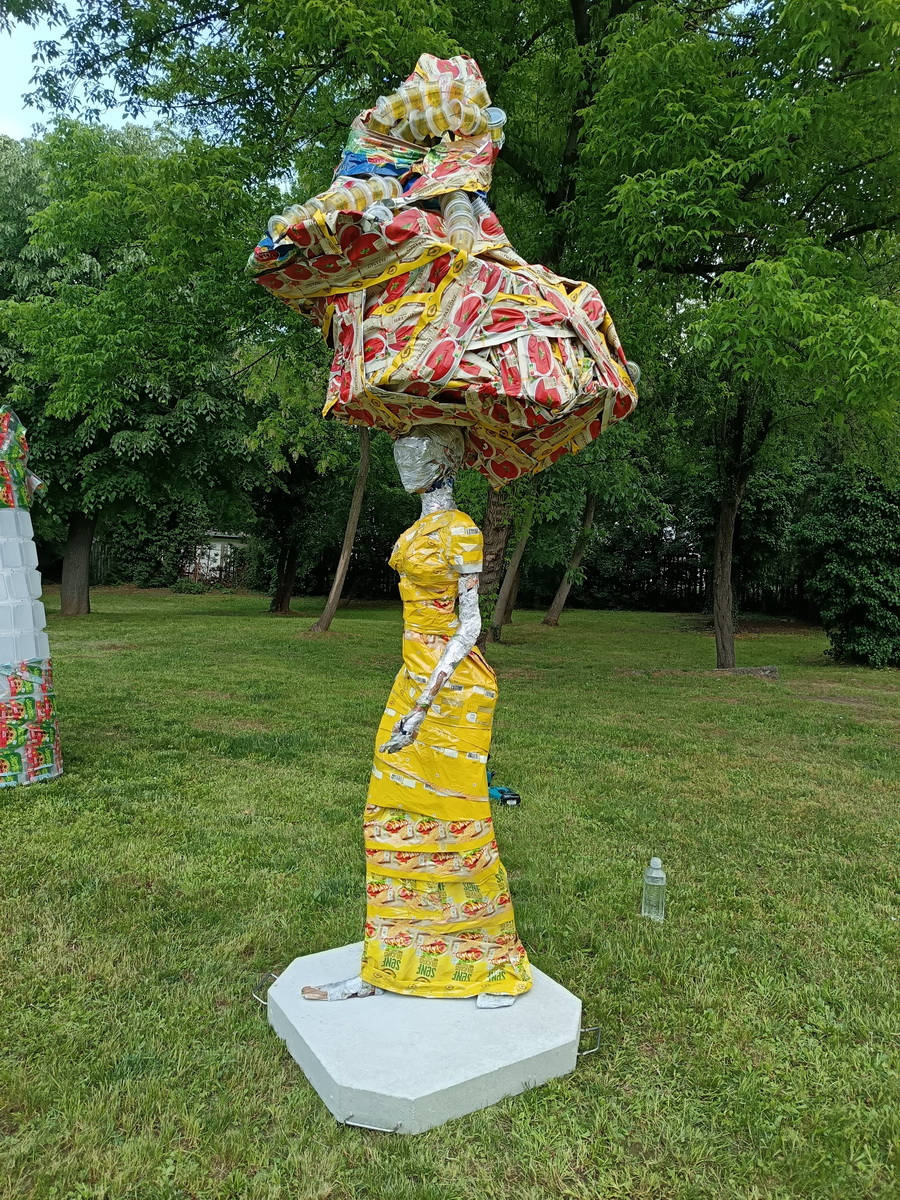
The Burden of the World on my Head - Marko Blanuša
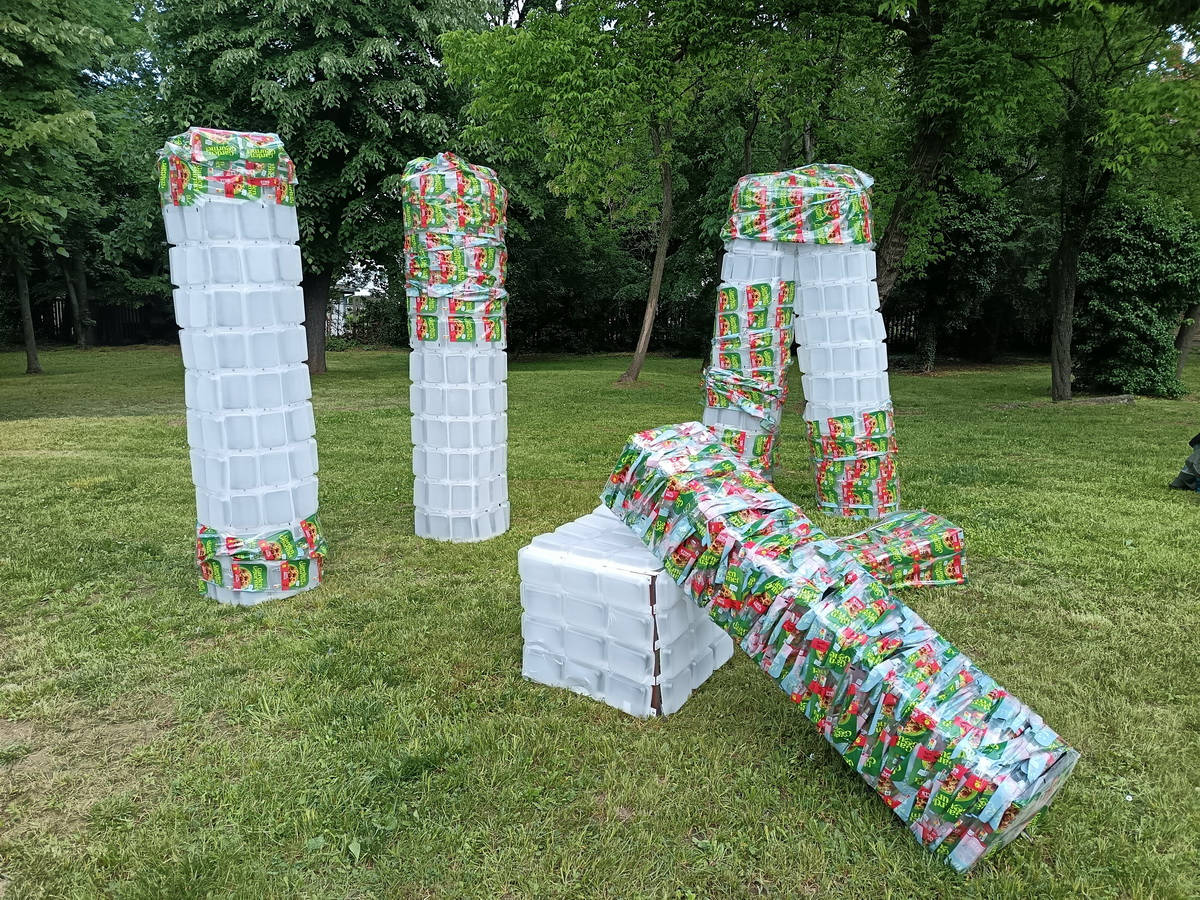
Plastic Age - Petar Božović
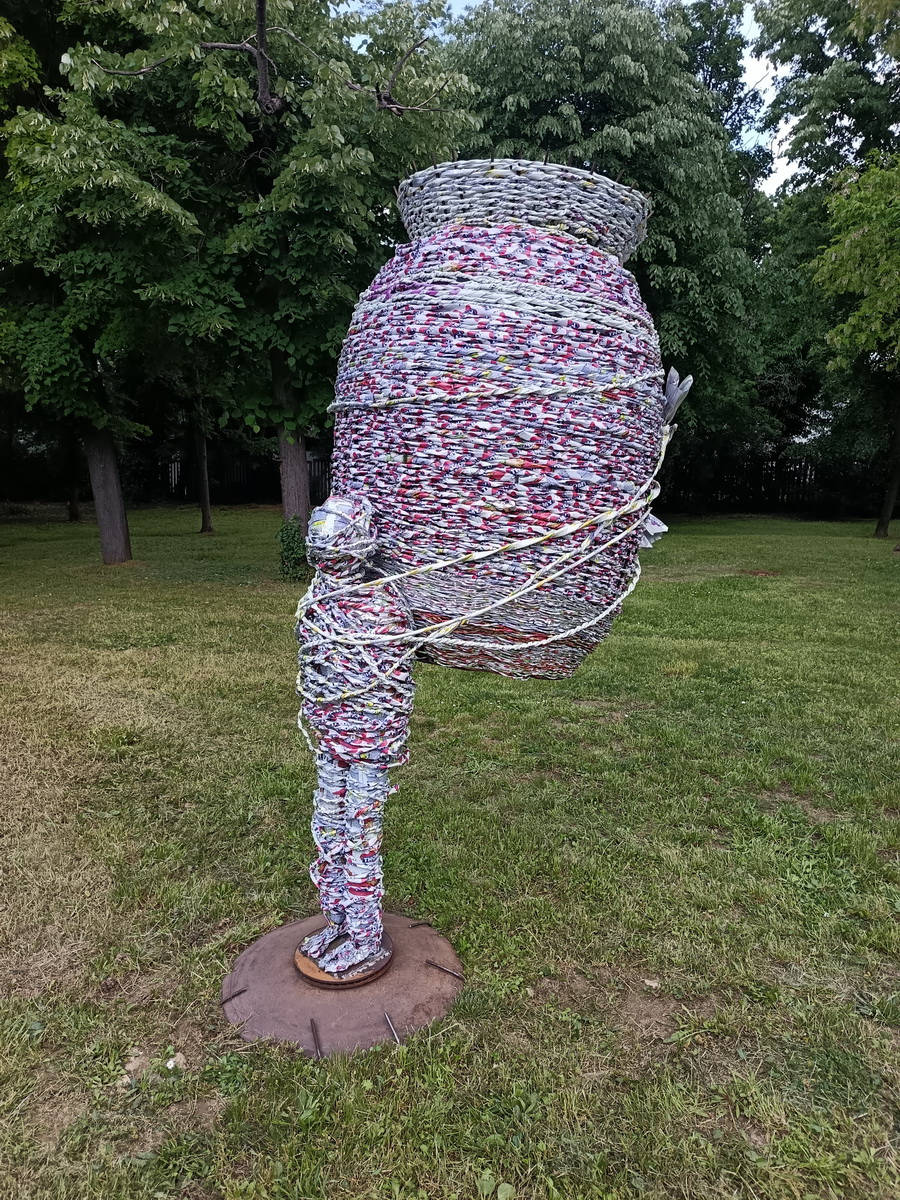
Without a Voice - Damjan Božović
Within the exhibition “Recy: Sculpt(H)ure-aay,” packaging of everyday food products – including Začin C, C soups and meal additives, THOMY mayonnaise, and Garden Gourmet meals – has been given new life through sculptural works by three young artists, supported by Nestlé Serbia at the beginning of their artistic careers and professional development.
Nestlé, as the world’s largest food and beverage producer, is aware of its responsibility regarding sustainable development, and through this exhibition sends a strong message about the importance of circularity. Nestlé reflects these principles in its production and operations. Its factory in Surčin is the first in Serbia to achieve the Zero Waste to Landfill goal in the food industry, meaning that waste does not end up in municipal landfills but is separated, recycled, or converted into energy. Globally, nearly 90% of Nestlé packaging is designed for recycling.
At the ceremonial opening of the program “Recy: Sculpt(H)ure-aay” at the Museum of African Art, the audience was addressed by Ivana Vojt, senior curator of the Museum of African Art and author of the program, Marijana Davidović, General Manager of Nestlé for Serbia, Montenegro, and North Macedonia, Renata Matusinović, General Manager for the Food Categories of Nestlé’s Southern and Eastern European market, as well as Petar Božović, author of the sculpture “Plastic Age.”
Panel discussion “Waste as a Resource in the Circular Economy”
On the occasion of the exhibition opening, a Nestlé panel discussion “Waste as a Resource in the Circular Economy” was held, with participants including: Milan Veselinov, founder and director of CirEkon doo, Violeta Belanović, General Manager of Sekopak, Vidosava Džagić, Assistant Director of the Chamber of Commerce of Belgrade / Chamber of Commerce of Serbia and Tanja Basta, Sustainable Development Expert for the Southern and Eastern European region, Tetrapak.
The discussion was moderated by Ivanka Stojnić, Sustainable Development Manager for the Southern and Southeastern European region at Nestlé.


Photo: Aleksej Nešović, Nestlé Serbia
Click here to download the program brochure (.pdf)


